考研阅读:2023年考研英语研一 Text 1
2024-07-05
浏览(1)
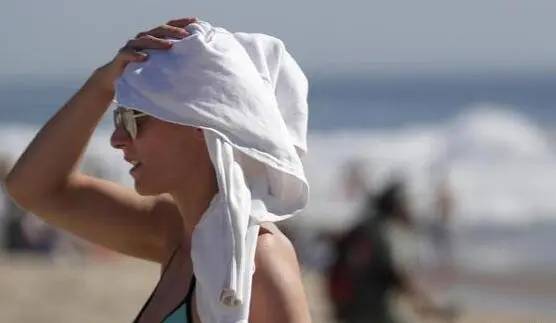
[1]The weather in Texas may have cooled since the recent extreme heat, but the temperature will be high at the State Board of Education meeting in Austin this month as official debate how climate change is taught in Texas schools.
[2]Pat Hardy, who sympathizes with the views of the energy scetor, is resisting proposed changes to science standards for pre-teen pupils.
These would emphasize the primacy of human activity in recent climate change and encourage discussion of migitation measures.
[3]Most scientists and experts sharply dispute Hardy’s views.
“They casually dismiss the career work of scholars and scientists as just another misguided opinion.” says Dan Quinn, snior communication strategist at the Texas Freedom Network, a non-proft goup that monitors public education.
“What millions of Texas kids lean in their public school is determined too often by the political ideology of partisan board members, rather than facts and sound scholarship.”
[4]Such debate reflects fierce discussions across the US and around the world, as researchers, policymakers, teachers and students step up demands for a greater focus on teaching about the facts of climate change in schools.
[5]A study last year by the National Center for Science Education, a non-profit group of scientists and teachers, looking at how state public schools across the country address climate change in science classes, gave barely half of US states a grade B+ or higher.
Among the 10 worst performers were some of the most populous states, including Texas, which was given the lowest grade (F) and has a disproportionate influence because its textbooks are widely sold elsewhere.
[6]Glenn Branch, the center’s deputy director, cautions that setting state-level science standards is only one limited benchmark in a country that decentralizes decisions to local school boards.
Even if a state is considered a high performer in its science standards, “that does not mean it will be taught,” he says.
[7]Another issue is that, whill climate change is well integrated into some subjects and at some ages -- such as earth and space sciences in high schools -- it is not as well represented in curricula for young children and in subjects that are more widely taught, such as biology and chemistry.
It is also less prominent in many social studies courses.
[8]Branch points out that, even if a growing number of official guidelines and textbooks reflect scientific consensus on climate change, unofficial educational materials that convey more slanted perspectives are being distributed to teachers.
They include materials sponsored by libertarian think-tanks and energy industry associations.
21. In the first paragraph, the weather in Texas is mentioned to ______.
[A] forecast a policy shift in Texas school
[B] stress the consequences of climate change
[C] indicate the atmosphere at the board meeting
[D] draw the public’s attention to energy shortages
22. What does Quinn think of Hardy?
[A] She exaggerates the existing panic.
[B] She denies the value of scientific work.
[C] She shows no concern for pre-teens.
[D] She expressed self-contradictory view.
23. The study in paragraph 5 shows that ______.
[A] limited education is insufficient at the states public schools.
[B] policymakers have little drive for science education.
[C] Texas is reluctant to rewrite its science textbook.
[D] environmental teaching in some states lacks supervision.
24. According to Branch, state-level science standards in the US ______.
[A] call for regular revision
[B] require urgent application
[C] have limited influence
[D] cater to local needs
25. It is implied in the last paragraph that climate change teaching in some schools ______.
[A] agree to major public demands
[B] reflects teachers’ personal biases
[C] may misrepresent the energy sector
[D] can be swayed by external forces

扫码查看更详细解析
点击查看解析和答案
链接:https://wxmpurl.cn/TYrkjRuBG4a
关于

乐其英语 乐在其中