专八英语阅读:2024年专八真题 PASSAGE ONE
2025-02-19
浏览(1)
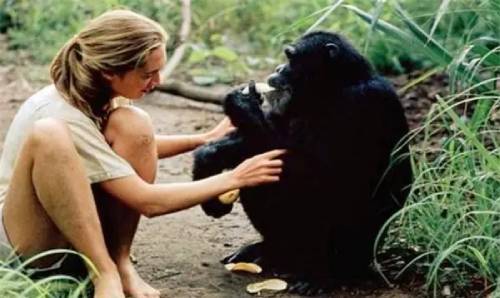
(1)If the properties of human language make it such a unique communication system, quite different from the communication systems of other creatures, then it would seem extremely unlikely that other creatures would be able to understand it. Some humans, however, do not behave as if this is the case.
There is, after all,a lot of spoken language directed by humans to animals, apparently under the impression that the animal follows what is being said. Riders can say Whoa to horses and they stop.
Should we treat these examples as evidence that non-humans can understand human language? Probably not.
The standard explanation is that the animal produces a particular behavior in response to a particular sound-stimulus or noise, but does not actually "understand" what the words in the noise mean.
(2) In an early attempt to teach a chimpanzee to use human language , in the 1930s,two scientists (Luella and Winthrop Kellogg) raised an infant chimpanzee together with their baby son.
The chimpanzee, called Gua, was reported to be able to understand about a hundred words, but did not " say" any of them. In the 1940s,a chimpanzee named Viki was reared by another scientist couple ( Catherine and Keith Hayes ) in their own home, exactly as if she was a human child.These foster parents spent five years attempting to get Viki to "say" English words by trying to shape her mouth as she produced sounds.
Viki eventually managed to produce some words,rather poorly articulated versions of "mama","papa" and "cup".
In retrospect, this was a remarkable achievement since it has become clear that non-human primates do not actually have a physically structured vocal tract which is suitable for articulating the sounds used in speech.
(3)Recognizing that a chimpanzee was a poor candidate for spoken language learning, another scientist couple ( Beatrix and Allen Gardner ) set out to teach a female chimpanzee called Washoe to use a version of American Sign Language.
This sign language has all the essential properties of human language and is learned by many congenitally deaf children as their natural first language.
From the beginning, the Gardner's and their research assistants raised Washoe like a human child in a comfortable domestic environment.
Sign language was always used when Washoe was around and she was encouraged to use signs.
In a period of three and a half years, Washoe came to use signs for more than a hundred words.
Even more impressive was Washoe's ability to take these forms and combine them to produce " sentences" of the type gimme tickle, more fruit and open food drink.
Some of the forms appear to have been inventions by Washoe, as in her novel sign for "bib" and in the combination "water bird" ( referring to a swan) , which would seem to indicate that her communication system had the potential for productivity.
(4) At the same time as Washoe was learning sign language,another chimpanzee named Sarah was being taught(by Ann and David Premack ) to use a set of plastic shapes for the purpose of communicating with humans.
These plastic shapes represented "words" that could be arranged in sequence to build " sentences".
The basic approach was quite different from that of the Gardner's.
Sarah was systematically trained to associate these shapes with objects or actions.
She remained an animal in a cage, being trained with food rewards to manipulate a set of symbols.
Once she had learned to use a large number of these plastic shapes, Sarah was capable of getting an apple by selecting the correct plastic shape ( a blue triangle)from a large array.
Sarah was also capable of producing " sentences" such as "Mary give chocolate Sarah" and had the impressive capacity to understand complex structures such as "If Sarah put red on green,Mary give Sarah chocolate"
(5) A psychologist Herbert Terrace argued that chimpanzees simply produce signs in response to the demands of people and tend to repeat signs those people use , yet they are treated as if they are taking part in a "conversation";As in many critical studies of animal learning , the chimpanzees' behavior is viewed as a type of conditioned response to cues provided by human trainers.
(6) Important lessons have been learned from attempts to teach chimpanzees how to use forms of language.
We have answered some questions.Were Washoe and Sarah capable of taking part in interaction with humans by using a symbol system chosen by humans and not chimpanzees? The answer is clearly "Yes." Could Washoe and Sarah go on to perform linguistically on a level comparable to a two-year-old child? The answer is just as clearly "No."
In arriving at these answers, we have also had to face the fact that, even with our list of key properties, we still don't seem to have a non-controversial definition of what counts as "using language".It has to be fair to say that, in both cases,we observe the participants "using language".
However, there is a difference. Underlying the two-year-old's communicative activity is the capacity to develop a highly complex system of sounds and structures, plus a set of computational procedures, which will allow the child to produce extended discourse containing a potentially infinite number of novel utterances.
No other creature has been observed "using language" in this sense.It is in this more fundamental or abstract sense that we say that language is uniquely human.
11.What can we learn from the two attempts in Para.2?
A.Being raised with a human child is essential.
B.Mouth shaping is crucial in language learning
C.Non-human creatures are different in vocal tracts.
D.Time length is an important factor in experiments.
12.Which of the following statements about Washoe and Sarah is INCORRECT?
A. They were taught in different approaches.
B.They were raised in similar environments.
C.They were somewhat innovative in expression.
D.They were non-human primates for experiments.
13.Which of the following is a conditioned response to human cues?
A.“Water bird"(Washoe )
B. Open food drink"(Washoe ).
C.“Mary give chocolate Sarah"(Sarah)
D.“Mama"and "cup"(Viki).
14.What is the topic of the passage?
A. Animals and human language.
B.Animals and human behavior.
C.Animal behavior and language.
D.Animal communication system.
25.What does “this”in Para. 1 refer to?
26.How did Washoe demonstrate the potential of productivity(Para.3)?

扫码查看更详细解析
点击查看解析和答案
链接:https://wxmpurl.cn/5H9GQAxBQhm
关于

乐其英语 乐在其中