专八英语阅读:2019年专八真题 PASSAGE THREE
2025-01-07
浏览(1)
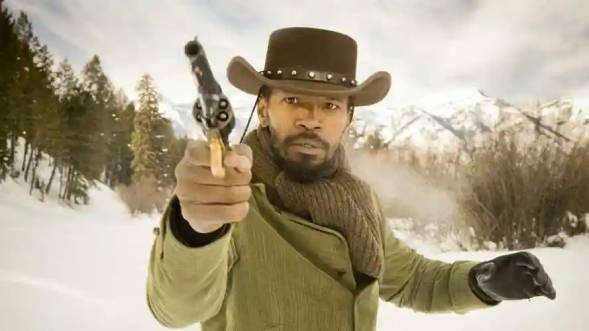
(1) Why make a film about Ned Kelly? More ingenious crimes than those committed by the reckless Australian bandit are reported every day.
What is there in Ned Kelly to justify dragging the mesmeric Mick Jagger so far into the Australian bush and away from his natural haunts? The answer is that the film makers know we always fall for a bandit, and Jagger is set to do for bold Ned Kelly what Brando once did for the arrogant Emiliano Zapata.
(2) A bandit inhabits a special realm of legend where his deeds are embroidered by others; where his death rather than his life is considered beyond belief; where the men who bring him to "justice" are afflicted with doubts about their role.
(3) The bandits had a role to play as definite as that of the authorities who condemned them.
These were men in conflict with authority, and in the absence of strong law or the idea of loyal opposition, they took to the hills.
Even there, however many of them obeyed certain unwritten rules.
(4) These robbers, who claimed to be something more than mere thieves, had in common, firstly, a sense of loyalty and identity with the peasants they came from.
They didn't steal the peasant's harvests they did steal the lords.
(5) And certain characteristics seem to apply to "social bandits" whether they were in Sicilyor Peru They were generally young men under the age of marriage, predictably the best age for dissidence.
Some were simply the surplus male population who had to look for another source of income; others were run away serfs or ex-soldiers; a minority, though the most interesting, were outstanding men who were unwilling to accept the meek and passive role of peasant.
(6) They usually operated in bands between ten a and twenty strong and relied for survival on difficult terrain and bad transport.
And bandits prospered best where authority was merely local-over the next hill and they were free.
Unlike the general run of peasantry they had a taste for flamboyant dress and gesture; but they usually shared the peasants’ religious beliefs and superstitions.
(7) The first sign of a man caught up in the Rob in Hood syndrome was when he started out, forced into outlawry as a victim of injustice; and when he then set out to "right wrongs" , first his own and then other people's.
The classic bandit then "takes from the rich and gives to the poor" in conformity with his own sense of social injustice; he never kills except in self-defense or justifiable revenge; he stays within his community and even returns to it if he can to take up an honorable place; his people admire and help to protect him; he dies through the treason of one of them; he behaves as if invisible and invulnerable; he is a "loyalist" , never the enemy of the king but only of t he local oppressors.
(8) None of the bandits lived up fully to this image of the "noble robber" and for many the claim of larger motives was often a delusion.
(9) Yet amazingly, many of these violent men did behave at least half the time in accordance with ##this idealist pattern.## Pancho Villa in Mexico and Salvatore Giuliano in Italy ##began their careers harshly victimized.## Many of their charitable acts later became legends.
(10)Far from being defeated in death, bandits’ reputation for invincibility was often strengthened by the manner of their dying.The"dirty little coward" who shot Jesse James in the back is in every ballad t him, and the implication is that nothing else could have brought Jesse down.
Even when the police claimed the credit, as they tried to do at first with Giuliano’s death, the local people refused to believe it.
And not just the bandit's vitality prompts the people to refuse to believe that their hero has died; his death would be in some way the death of hope.
(11)For the traditional "noble robber" represents an extremely primitive form of social protest, perhaps the most primitive there is.
##He is an individual who refuses to bend his back,## that is all.
Most protesters will eventually be bought over and persuaded to come to terms with the official power.That is why the few who do not, or who are believed to have remained uncontaminated, have so great and passionate a burden of admiration and longing laid upon them.
They cannot abolish oppression But they do prove that justice is possible, that poor men need not be humble helpless and meek.
(12) The bandit in the real world is rooted in peasant society and when its simple agricultural system is left behind so is he.
But the tales and legends, the books and films continue to appear for an audience that is neither peasant nor bandit.
In some ways the characters and deeds of the great bandits could so readily be the stuff of grand opera-Don Jose in "Carmen" is based on the Andalusian bandit El Empranillo.
But they are perhaps more at home in folk songs, in popular tales and the ritual dramas of films.
When we sit in the darkness of the cinema to watch the bold deeds of Ned Kelly we are caught up in admiration for their strong individuality, their simple gesture of protest, their passion for justice and their confidence that they cannot be beaten.
This sustains us nearly as much as it did the almost hopeless people from whom they sprang.
21. Which of the following words is NOT intended to suggest approval of bandits?
A. Bold (Para. 1).
B. Claimed (Para. 4).
C.Legend (Para. 2)
D. Loyalty(Para. 4).
22.Of the following reasons which is the LEAST likely one for becoming bandits?
A. They liked theatrical clothes and behavior.
B. They wanted to help the poor country folk.
C. They were unwilling to accept injustice
D. They had very few careers open to them.
23.“... began their careers harshly victimized”(Para. 9) means that they ___
A. had received excessive ill-treatment
B. were severely punished for their crimes
C. took to violence through a sense of injustice
D. were misunderstood by their parents and friends
24.What has made bandits suitable as film heroes is that they ___
A.are sure they are invincible
B. possess a theatrical quality
C. retain the virtues of a peasant society
D. protest against injustice and inequality
30.Write down TWO features of the idealist pattern (Para. 9).
31.What does “hope” mean according to the context (Para. 10)?
32.What does“He is an individual who refuses to bend his back” mean (Para. 11)?

扫码查看更详细解析
点击查看解析和答案
链接:https://wxmpurl.cn/eJU1dinbT6a
关于

乐其英语 乐在其中