六级英语阅读:2026年6月六级英语真题 卷三 PASSAGE TWO
2026-08-27
浏览(441)
Questions 51 to 55 are based on the following passage.
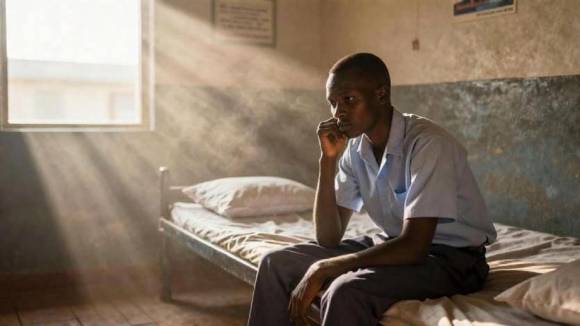
On a warm October morning, Daniel Agok woke up to another disappointing day at his school in Wanyjok, South Sudan. The classes he had planned teaching computer skills to aspiring young professionals were canceled, due to an unreliable diesel generator and the absence of a municipal power grid in his area. Now, he would be losing frustrated customers as well as income. Agok is just one of the hundreds of millions of people in sub-Saharan Africa, many of whom are business owners, who still do not have dependable electricity. This inequitable access to energy continues to put their livelihood and future at risk.
The current system keeps a lid on the economic talents of people like Agok and his students. We must instead unleash their abilities and let Africa reach its true economic potential. That means wiring Africa with clean, dependable energy.
Historically, national governments on the continent have led electrification efforts, but fewer than half of the people surveyed say that the national grid is providing a reliable supply of electricity.
This has led to expensive and harmful temporary “solutions”. In Nigeria alone, experts estimate people spend $13 billion every year on fuel for toxic, polluting generators. That number will only grow as the continent’s population hits 2.5 billion people by 2050. Deploying modern grid infrastructure with speed and at scale is essential to replacing these temporary solutions with reliable and affordable alternatives.
The rapidly growing private power sector in Africa holds the key to achieving the speed and scale necessary to close the continent’s energy access gap. Private companies today are building world-class infrastructure and driving forward economic growth with sustainable business models. In fact, many governments agree and have begun to embrace the private sector as partners in providing reliable power at scale. In South Africa, President Cyril Ramaphosa has streamlined licensing requirements and enlisted the private sector to play a key role.
South Africa is just one example. Across the continent, the private sector has delivered power faster and more reliably, and governments are increasingly turning to private partners.
With the right funding and structure in place, the private sector will come together to provide this essential service. After all, electrifying sub-Saharan Africa is a $350 billion opportunity.
Today, Daniel Agok is steadily growing his business in South Sudan. His town of Wanyjok was electrified by a private company, providing clean, reliable, and affordable power to his business and his neighbors. Agok now operates his growing computer skills training business smoothly. His classes are no longer affected by the smell and the constant noise of the diesel generator, and he saves money with more affordable power. His students are developing hardware and software skills.
51. What do we learn about the current electric supply system in Africa?
A) It curbs the economic development of the continent.
B) It mainly depends on the polluting diesel generators.
C) It is the primary cause of inequitable distribution of wealth.
D) It deprives many Africans of the opportunity to use computers.
52. What do we learn from the passage about Africa’s past electrification efforts?
A) They have failed to meet most Africans’ need of a reliable power supply.
B) They have failed to build a national grid to provide electric power.
C) They have unleashed the true economic potential of the continent.
D) They have aimed at wiring Africa with clean, dependable energy.
53. What is essential to tackling the power supply shortage in Africa?
A) Replacing temporary solutions with long-term strategies.
B) Accelerating economic growth with sustainable policies.
C) Restructuring national power generation companies.
D) Putting in place a large-scale modern power grid speedily.
54. What are many governments in Africa doing to solve the electricity supply problem?
A) Focusing on building world-class infrastructures.
B) Relying on the private sector for scale economy.
C) Launching sustainable business models.
D) Cooperating with private companies.
55. Why will private companies be motivated to join the effort of electrifying sub-Saharan Africa?
A) There is big money to be made.
B) They have enough funding in place.
C) South Africa has set a successful example.
D) Governments are turning to them for help.

扫码查看更详细解析
点击查看解析和答案
链接:https://wxmpurl.cn/hkMCZ9HMuxg
关于

乐其英语 乐在其中