四级英语阅读:2025年12月四级英语真题 卷二 PASSAGE TWO
2026-02-20
浏览(372)
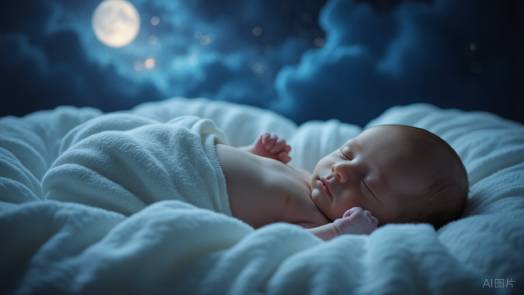
Adults dream during REM(rapid eye movement) sleep and infants have loads of REM. So,it might be fair to assume that babies have tons of dreams.
But scientists believe REM serves a completely different purpose for newborns and infants than dreaming. When babies are in REM,it allows their brain to develop pathways, connections,and eventually, learn languages.
Since your baby doesn't dream at this stage of brain development, it's safe to assume babies do not have nightmares, either. Nightmares stem from exposure to trauma(创伤),an overactive imagination, and the normal stresses of everyday life.
Are you wondering,what do babies dream about? Good question, but the answer is nothing!
So,when do babies start dreaming? The general consensus is that they start dreaming around the age of two. Psychologist David Foulkes studies children(from very small kids to teens) to bring the secrets of their dreams to the light of day. In his lab,he lets kids fall asleep and then wakes them 3 times a night and asks them to describe what they recall.
Foulkes' findings are unsurprising. Basically, little kids have little dreams. But exactly what kids see while dreaming depends on their age. As children develop and grow,their dreams do too.
Dreams of very small kids are usually just snapshots(快照),looking much more like a slideshow than a movie, when compared to the dreams of adults. They heavily feature animals and other familiar sights, like images of people eating. According to Foulkes, "Children's dream life...seems to be similar to their waking imagination and narration." Kids ages 5—9 begin seeing moving images and characters in action. Dreams now include multiple events strung together,one after the other. They also start developing greater ability to remember dreams. Still, that's not always the case: When roused during REM sleep,25of the kids in Foulkes' studies had no recollection of dreaming, a trend that continues through age 9.
So,if your baby seems to be in a stressful state while sleeping or is upset upon waking, there may be other factors at play.
51.What do scientists think of REM?
A)It is a sign of dreaming in adults and infants alike.
B)It is essential to human beings' language learning.
C) It determines the formation of connections in the brain.
D)It performs a different function in babies than in adults.
52. What can we infer about nightmares from the passage?
A)They occur often in people with an active imagination.
B)They occur in people suffering from emotional stress.
C) They vary in different stages of brain development.
D) They appear in the sleep of both adults and infants.
53. What is the aim of psychologist David Foulkes' study?
A)To reveal the secrets of children's dreams.
B)To see if children start dreaming at age two.
C) To solve the mystery of dreaming and brain growth.
D)To confirm the general consensus on when kids dream.
54.What are Foulkes' findings about kids' dreams?
A) They feature strange animals.
B)They are unsurprising to adults.
C) They grow and evolve with age.
D) They reflect kids' waking life.
55.What can we assume about babies who appear upset upon waking?
A)They have been roused against their will.
B)They have been disturbed by a nightmare.
C) They have trouble recollecting the images of their dreams.
D)They have been affected by something other than dreaming.

扫码查看更详细解析
点击查看解析和答案
链接:https://wxmpurl.cn/u0UVHh9tfzo
关于

乐其英语 乐在其中