考研英语阅读:2025年考研英语二 阅读 Text 3
2025-05-05
浏览(1)
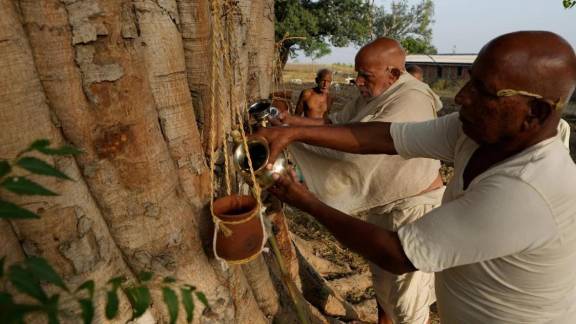
[1]Heat action plans, or HAPs, have been proliferating in India in the past few years. In general, a HAP spells out when and how officials should issue heat warnings and alert hospitals and other institutions. Nagpur's plan, for instance, calls for hospitals to set aside "cold wards" in the summer for treating heatstroke patients, and advises builders to give construction laborers a break from work on very hot days.
[2]But implementation of existing HAPs has been uneven, according to a report from the Centre for Policy Research. Many lack adequate funding, it found. And their triggering thresholds often are not customized to the local climate. In some areas, high daytime temperatures alone might serve as an adequate trigger for alerts. But in other places, nighttime temperatures or humidity might be as important a gauge of risk as daytime highs.
[3]Mumbai's April heatstroke deaths highlighted the need for more nuanced and localized warnings, researchers say. That day's high temperature of roughly 36℃ was 1℃ shy of the heat wave alert threshold for coastal cities set by national meteorological authorities. But the effects of the heat were amplified by humidity—an often neglected factor in heat alert systems -and the lack of shade at the late-morning outdoor ceremony.
[4]To help improve HAPs, urban planner Rajashree Kotharkar's team is working on a model plan that outlines best practices and could be adapted to local conditions. Among other things, she says, all cities should create a vulnerability map to help focus responses on the populations most at risk.
[5]Such mapping doesn't need to be complex, Kotharkar says. "A useful map can be created by looking at even a few key parameters." For example, neighborhoods with a large elderly population or informal dwellings might be poorer with heat could get special warnings or be bolstered with cooling centers. The Nagpur project has already created a risk and vulnerability map, which enabled Kotharkar to tell officials which neighborhoods to focus on in the event of a heat wave this summer.
[6]HAPs shouldn't just include short-term emergency responses, researchers say, but also recommend medium-to long-term measures that could make communities cooler. In Nagpur, for example, Kotharkar's team has been able to advise city officials about where to plant trees to provide shade. HAPs could also guide efforts to retrofit homes or modify building regulations. "Reducing deaths in an emergency is good target to have, but it's the lowest target," says climate researcher Chandri Singh.
31. According to Paragraph 1, Nagpur's plan proposes measures to ________.
[A] tackle extreme weather
[B] ensure construction quality
[C] monitor emergency warnings
[D] address excessive workloads
32. One problem with existing HAPs is that they________.
[A] prove too costly to be implemented
[B] lack localized alert-issuing criteria
[C] give delayed responses to heat waves
[D] keep hospitals under great pressure
33. Mumbai's case shows that India's heat alert systems need to________.
[A] include other factors besides temperature
[B] take subtle weather changes into account
[C] prioritize potentially disastrous heat waves
[D] draw further support from local authorities
34. Kotharkar holds that a vulnerability map can help________.
[A] prevent the harm of high humidity
[B] target areas needing special attention
[C] expand the Nagpur project's coverage
[D] make relief plans for heat-stricken people
35.According to the last paragraph, researchers believe that HAPs should________.
[A] focus more on heatstroke treatment
[B] apply for more government grants
[C] invite wider public participation
[D] serve a broader range of purposes

扫码查看更详细解析
点击查看解析和答案
链接:https://wxmpurl.cn/Kc7kqGDYNei
关于

乐其英语 乐在其中