考研英语阅读:2025年考研英语二 阅读 Text 1
2025-05-05
浏览(1)
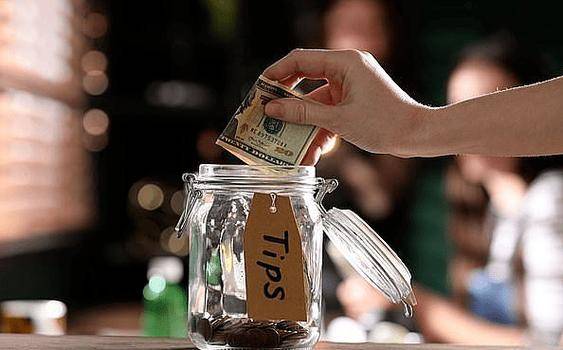
[1]U.S. customers historically tipped people they assumed were earning most of their income via tips, such as restaurant servers earning less than the minimum wage. In the early 2010s, a wide range of businesses started processing purchases with iPads and other digital payment systems. These systems prompted customers to tip for services that were not previously tipped.
[2]Today's tip requests are often not connected to the salary and service norms that used to determine when oud how people tip. Customers in the past nearly always paid tips after receiving a service, such as at the conclusion of a restaurant meal, after getting a haircut or once a pizza was delivered. That timing could reward high-quality service and give workers an incentive to provide it.
[3]It's becoming more common for tips to be requested beforehand. And new tipping technology may even automatically add tips.
[4]The prevalence of digital payment devices has made it easier to ask customers for a tip. That helps explain why tip requests are creeping into new kind of services. Customers now routinely see menus of suggested default options-often well above 70% of what they owe. The amounts have risen from 10% or less in the 1950s to 15% around the year 2000 to 20% or higher today. This increase is sometimes called tipflation-the expectation of ever-higher tip amounts.
[5]Tipping has always been a vital source of income for workers in historically tipped services, like restaurants, where the tipped minimum wage can be as low as US $2.13 an hour. Tip creep and tip flation are now further supplementing the income of many low-wage service workers.
[6]Notably, tipping primarily benefits some of these workers, such as cooks and dishwashers. To ensure that all employees were paid fair wages, some restaurants banned tipping and increased prices, but this movement toward no-tipping services has largely fizzled out.
[7]So to increase employee wages without raising prices,more employees to temptations of tip creep and tipflation.However,many customers are frustrated because they feel they are being asked for too high of a tip,too often.And,as our research emphasizes,tipping now seems to be more coercive,less generous,and often completely disassociated from service quality.
21. According to paragraph 1, the practice of tips in the U.S.________.
[A] was regarded by many customers as a sign of generosity
[B] was considered essential for waiters
[C]was a way of rewarding diligence
[D] was optional in most businesses
22. Compared with tips in the past, today's tips________.
[A] are paid much less frequently
[B] are less often requested in advance
[C] have less to do with service quality
[D] contributed less to workers' income
23. Tip requests are creeping into new kind of service as a result of ________.
[A] the advancement of technology
[B] the desire for income increase
[C] the diversification of business
[D] the emergence of tipflation
24. The movement toward to no-tipping service was intended to________.
[A] promote consumption
[B] enrich income sources
[C] maintain reasonable prices
[D] guarantee income fairness
25. It can be learned from the last paragraph that tipping ________.
[A] is becoming a burden for customers
[B] helps encourage quality service
[C] is vital to business development
[D] reflects the need to reduce prices

扫码查看更详细解析
点击查看解析和答案
链接:https://wxmpurl.cn/di8c6BnLoxj
关于

乐其英语 乐在其中